From Data to Diet: How GLUCOTYPES is redefining early type 2 diabetes prevention

From Data to Diet: How GLUCOTYPES is redefining early type 2 diabetes prevention

At the heart of our work in GLUCOTYPES is a key question: why do people respond differently to the same food? šŸ¤”

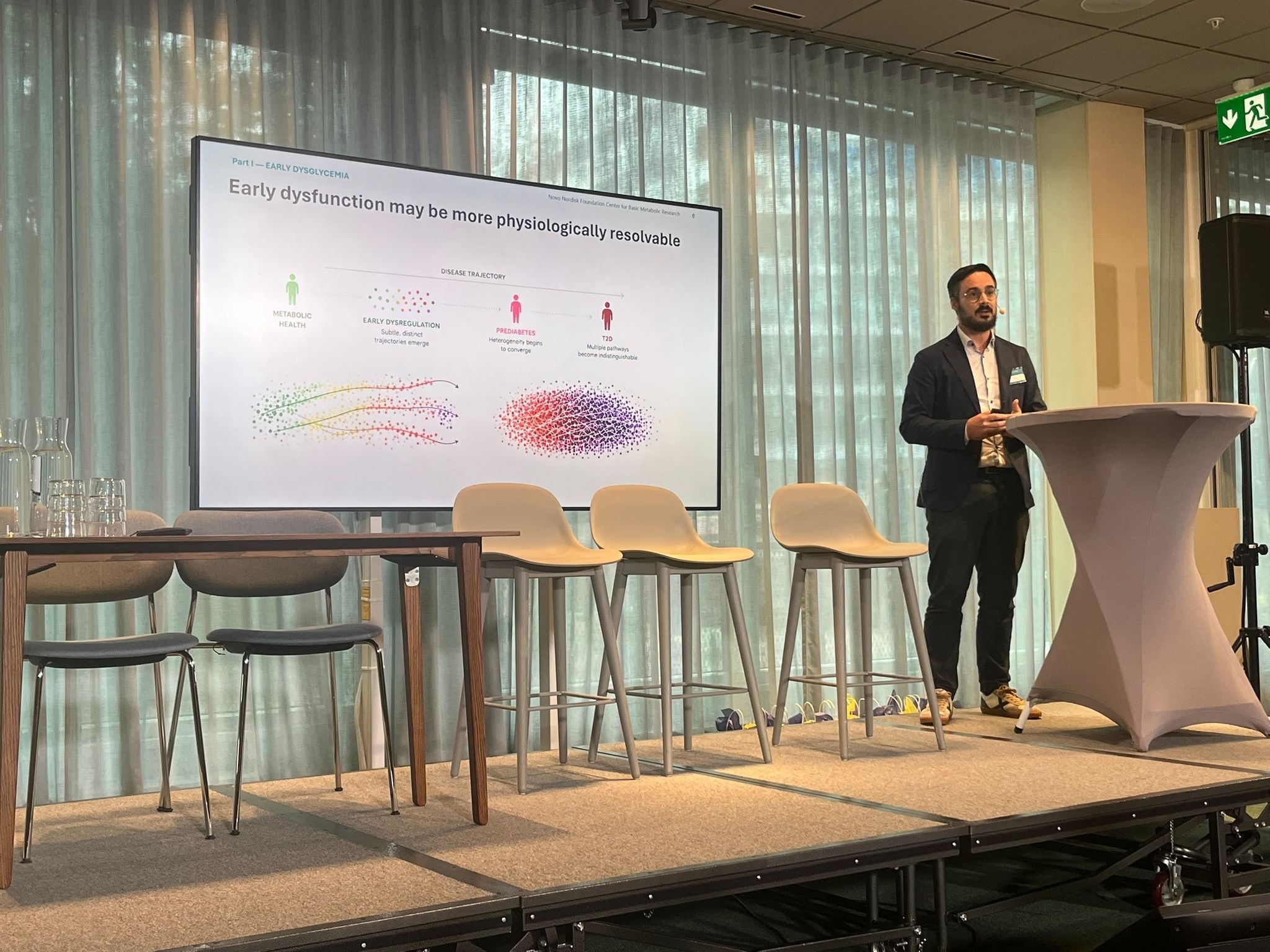
In an article published in the Agro FOOD industry hi-tech magazine, our coordinator Dr. Jordi Merino explains how the GLUCOTYPES project is tackling this challenge.

šŸ’” The article explores:
šŸ”¹ Why general nutrition advice often falls short.
šŸ”¹ How glucotypes can classify and predict individual responses to food.
šŸ”¹ The role of AI, multi-omics, and clinical validation in making nutrition both predictive and biologically grounded.
šŸ”¹ Opportunities for the food and biotech industries to develop targeted, functional products.

By introducing “glucotypes”, we aim to predict and explain individual responses to diet —paving the way for precision nutrition strategies, food innovation, and better metabolic health.

šŸ‘‰ Read the full article here: https://digital.teknoscienze.com/agrofood_industry_hi_tech_36_2_2025/glucose_-_from_data_to_diet_how_glucotypes_is_redefining_early_type_2_diabetes_prevention

Latest News

The EIC Precision Nutrition Portfolio deepens its collaborations

GluFormerĀ AI modelĀ publishedĀ inĀ NatureĀ 

The GLUCOTYPES consortium held its Annual Meeting in Santiago de Compostela

Stay Up-to-date

Share this post

Latest News & Events

Madrid-meeting-2026
News

The EIC Precision Nutrition Portfolio deepens its collaborations

20251112_105836
News

GluFormerĀ AI modelĀ publishedĀ inĀ NatureĀ 

20251113_102226
News

The GLUCOTYPES consortium held its Annual Meeting in Santiago de Compostela

Glucotypes-publication-KORA-study
News

Longitudinal study reveals plasma glycans associations with pre- and type 2 diabetes

Glucotypes_paper_in_JAMA-Network_sep2025
News

Carbohydrate quality and meal timing shape blood sugar spikes, even in people without diabetes

ICN2025 Session Precision Nutrition
Events

GLUCOTYPES represented at IUNS-ICN 2025