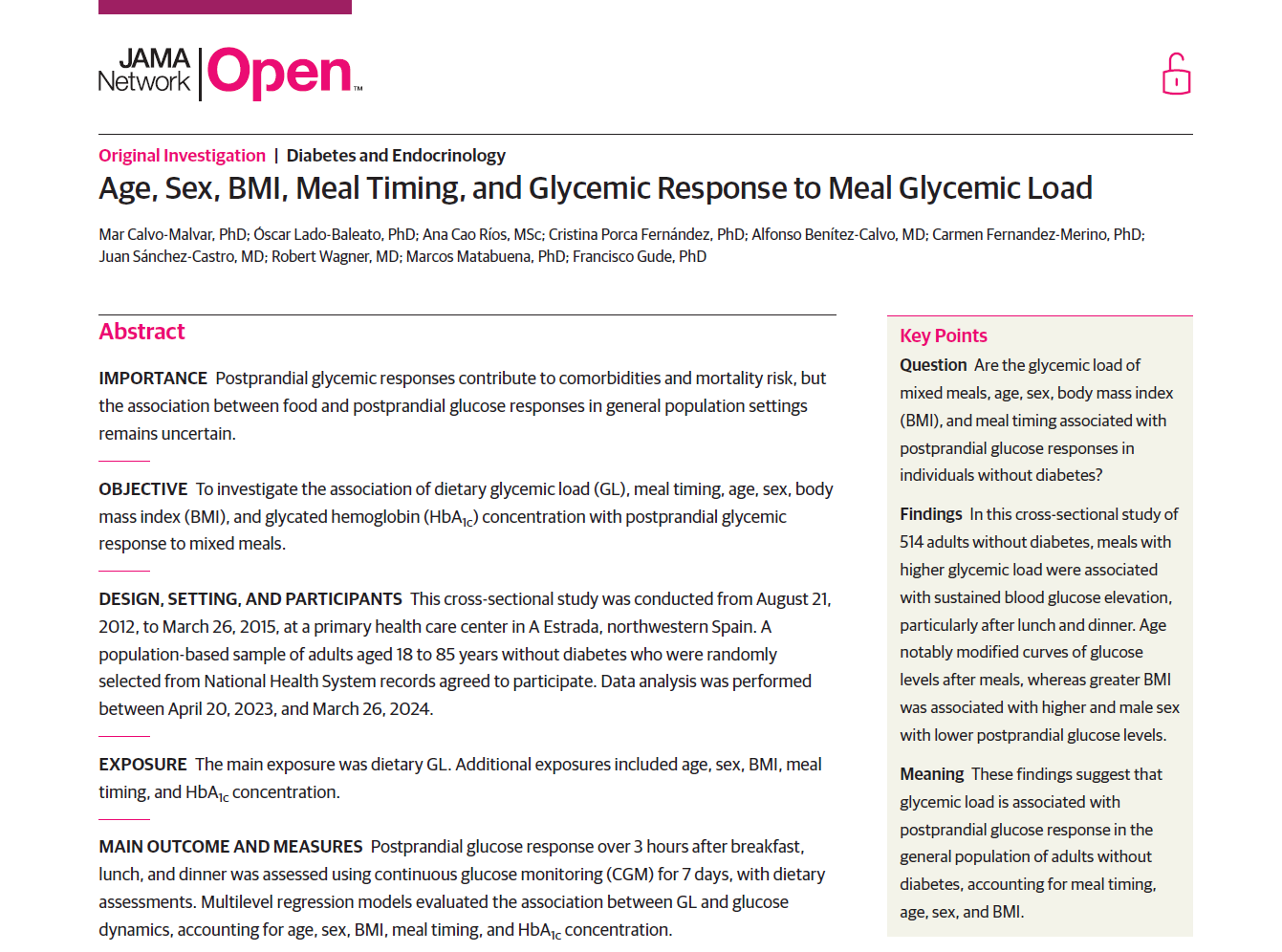
A population-based study published in JAMA Network Open shows that the way our blood sugar responds after meals depends not only on what we eat, but also on when we eat, our age, sex, and body mass weight.
After analyzing more than 1.3 million glucose measurements from 514 adults without diabetes in northwestern Spain and using continuous glucose monitoring, we found that:
- Meals with a higher glycemic load (GL) — a measure that combines carbohydrate quality and quantity — were linked to stronger and more sustained rises in blood sugar, especially after lunch and dinner.
- Age plays a major role: every decade of life was associated with higher post-meal glucose. In adults over 75, high-GL meals often pushed glucose above 130 mg/dL, a level associated with increased risk of developing type 2 diabetes.
- Sex and body weight matter: men had lower glucose responses than women, while higher body mass index (BMI) was linked to stronger rises, particularly after breakfast.
- Meal timing influences metabolism: early risers had smaller glucose spikes at breakfast but larger ones at lunch, while later bedtimes were linked to lower post-dinner glucose levels.
- Even within the normal range, glycated hemoglobin (HbA1c) was a strong predictor of post-meal glucose, reinforcing its role as an early warning sign of metabolic risk.
These findings confirm that the glycemic load of meals truly matters in everyday life, and that people’s responses vary with age, sex, weight, and daily habits. This reinforces the need to personalize nutrition and highlights the value of including glycemic load in dietary recommendations.
This is one of the largest studies worldwide using continuous glucose monitoring in people without diabetes. The results support the use of glycemic load as a simple but powerful tool to better understand how meals affect health and to guide strategies for diabetes prevention.
https://jamanetwork.com/journals/jamanetworkopen/fullarticle/2839231