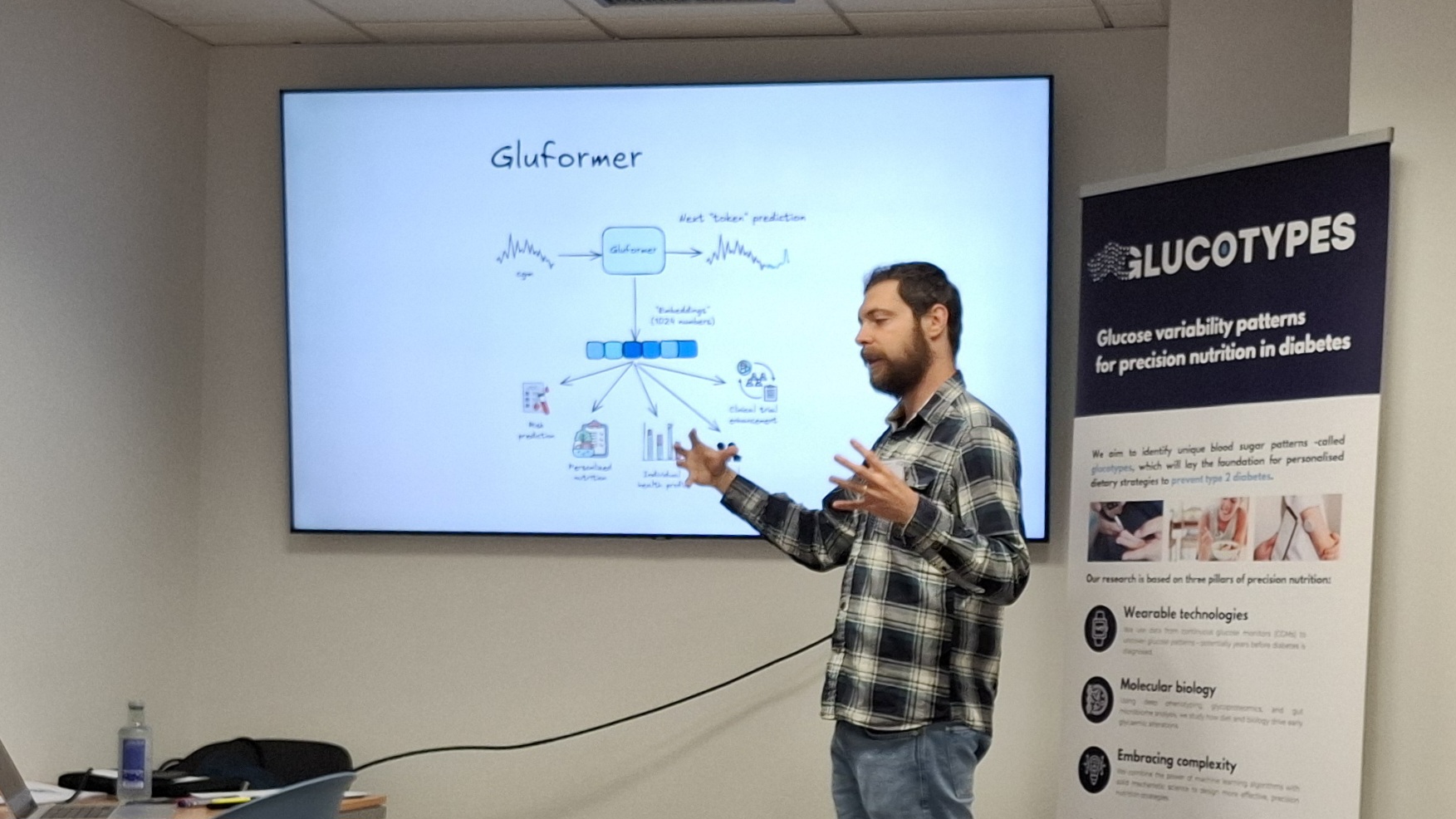
The scientific paper describing GluFormer, a generative AI model designed to predict blood glucose trajectories, has been published in Nature. The study presents a powerful new approach to analysing continuous glucose monitoring (CGM) data, with the potential to significantly advance how individual glucose regulation and metabolic risk are understood.
GluFormer is a transformer-based model that learns from sequential CGM data to predict future glucose levels and related health metrics years in advance. Trained on continuous glucose data from more than 10,000 participants, the model can forecast glucose measurements up to four years ahead. When dietary intake data are included, it can also estimate how an individual’s glucose levels are likely to respond to specific foods or dietary changes—opening new possibilities for personalised nutrition.
The researchers demonstrated that the model generalizes across diverse populations, including people with prediabetes, type 1 and type 2 diabetes, gestational diabetes and obesity. In addition to glucose levels, GluFormer can predict other clinically relevant indicators associated with metabolic health, such as visceral adipose tissue, systolic blood pressure, and sleep apnea metrics.
From prediction to prevention: powering glucotypes in practice
Within the GLUCOTYPES project, GluFormer will be a strong support to generate the distinct, data-driven patterns of glucose regulation derived from CGM data. These “glucotypes” form the basis for better characterising individual metabolic responses and identifying early signals of diabetes risk.
“In GLUCOTYPES, we want to use the model in a clinical setting to help patients characterise their risk of developing diabetes and try to help prevent it,” said Guy Lutsker, PhD student at the Weizmann Institute of Science and lead author of the paper.
By integrating advanced AI-based prediction with clinically meaningful glucose patterns, GLUCOTYPES aims to support earlier, more targeted strategies to reduce diabetes risk and improve long-term metabolic health.
Reference: Lutsker, G., Sapir, G., Shilo, S. et al. A foundation model for continuous glucose monitoring data. Nature (2026). https://doi.org/10.1038/s41586-025-09925-9